Welding in Weston: Residential Wine Cellar

The residential client who reached out about this project in an avid wine collector, who wanted to incorporate a space for his collection in a new house he was building in Weston, Vermont. After seeing our portfolio, they asked us to design them a one-of-a-kind wine cellar that would be a highlight of their new home.

The site of the new home formerly held two collapsing nineteenth-century structures that unfortunately could not be saved.  It was extremely important to the homeowners that as much of the material as possible be repurposed and used in the new construction.  The design for the home featured post and beam construction throughout, and wall treatments, cabinets, and trim details were all fabricated with salvaged materials.  Even the expansive stone work was created from rocks harvested from the surrounding land.

Having worked extensively with reclaimed barnwood in the past and given the very traditional application throughout the rest of the house, we wanted to introduce the material in different ways to help set this room apart.  We were able to sort through piles of salvaged materials and envision ways they could be transformed or installed in unconventional ways to maximize their impact in a small space. Beyond using the barnwood, our goal was introduce innovative ways to display wine that would be easily accessible and beautifully showcase the client’s collection of French wines.

The space had three walls for wine racks that would sit above counters, with open cabinets custom-sized to fit crates of wine below.  We started with the largest wall, designing steel racks that would pair well with the barnwood set behind them. To balance the modernity of the steel, we incorporated the largest of the barn wood beams as if they were structural elements, helping to anchor the steel.  For the smaller walls, we created thin steel shelves to slide into grooves that were cut into vertical planks of barn wood.  The racks and the shelving system allows the clients to store and display wine in a variety of bottle shapes and sizes, while also remaining visually interesting and complementing the aesthetic of the rest of the house.

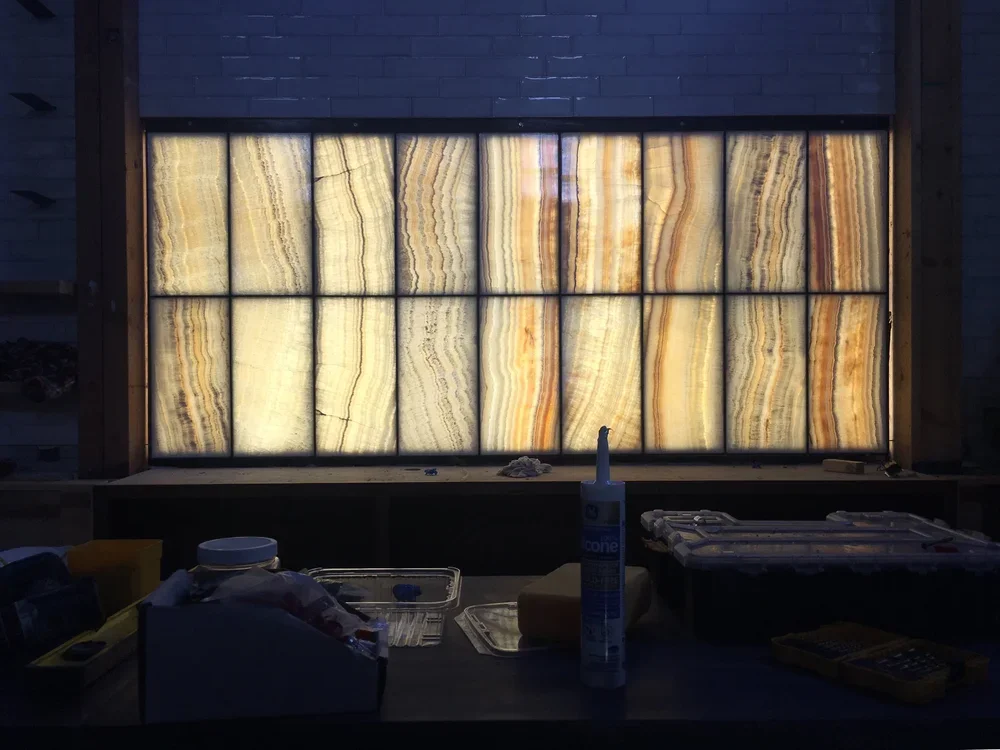
The space also has a bump out that contained the mechanical elements of the house.  Rather than viewing the dead space as a problem, we saw an opportunity to create a totally unique, custom light fixture for the room.  We ordered large, LED light panels commonly found in commercial drop ceilings, and welded together a custom steel frame to wrap around the bump out.  We then cut barnwood into “tiles” inspired by the shape of the wine bottle, and arranged them over the LED panels so that light would stream through the spaces between them.  More than anything else, this piece is an example of how we utilized the barn wood in interesting, unconventional ways, striking a balance between modern and traditional, rustic and refined.

We really enjoyed working on this space for our clients.  The salvaged barnwood they provided held a history that we preserved, while we were also able to incorporate more modern design elements that complemented the rest of the house.  The end result was a beautiful, high-impact space that met all of the family’s functional needs and reflected the elegance of wine collecting. ∆
High-end Food and Functionality: The Arcadian + Haymaker Buns Co.

Our culinarily-inclined clients bought the defunct Lobby restaurant in Middlebury, Vermont, and wanted to transform it into a multi-function space to combine their culinary passions. In the mornings, Haymaker Bun Co. would offer coffee and baked goods, and in the evenings, the space would become The Arcadian, a modern Italian bar and restaurant. The primary challenge was to design an interior that could house two different businesses at different times of day. We didn’t want to simply create a backdrop that would suit both businesses. We wanted to design elements that would enhance each of the two operations and highlight how they complement each other.

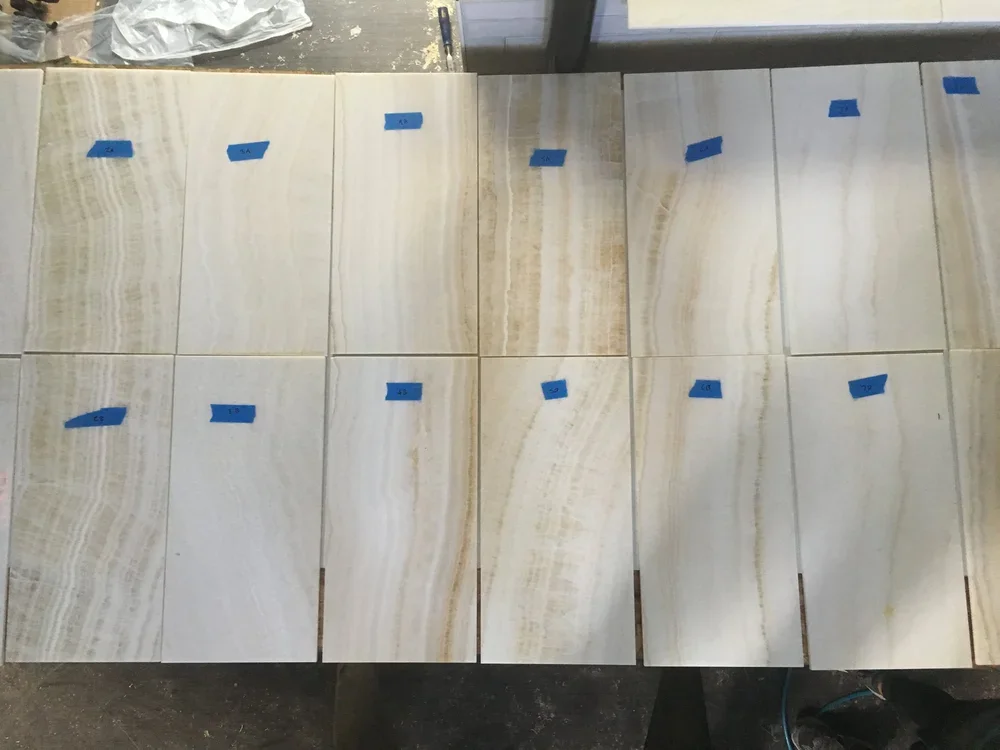
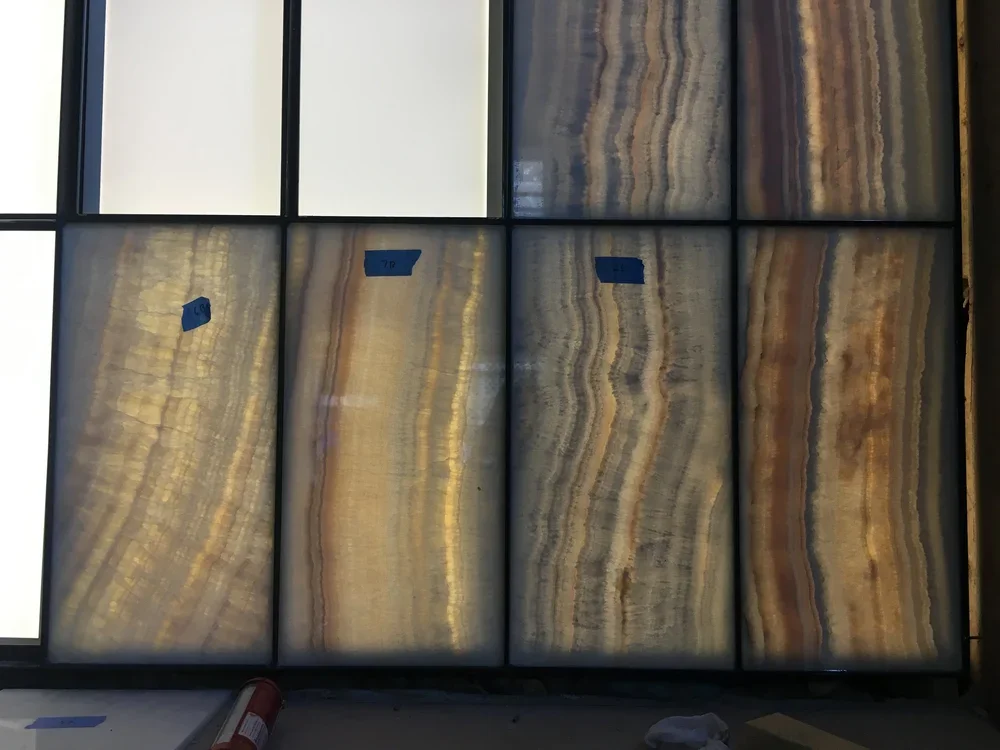
At the entrance, the space opens up to a bar area with dramatic 16 foot ceilings, and a clear view of the unique, three-level layout. This was an opportunity to create an impactful first impression, and facilitate a seamless transition from day to night. We started with the tall, open back bar wall with five large windows. Wanting to maintain privacy, we considered shades and different types of glass, before finally deciding to eliminate the windows altogether in favor of something more striking. We designed a custom light fixture that would brighten the space, fix the privacy issue, and draw the focus of people entering from the front. We loved the idea of backlit stone, but custom panels the size we needed were out of our client’s budget. We finally found 12” x 24” white onyx floor tiles that were affordable, and could be set in front of large LED light panels that are more commonly found in drop ceilings.

The back bar had initially felt like our biggest obstacle, but with some innovative thinking, we made it the highlight of the space. Our building experience allowed us to transform ordinary materials into a high-end element that was striking, functional, and reflected the day-to-night concept guiding our design. To complete the look, we tiled the entire back wall to create an effect distinct from the rest of the space without overshadowing the onyx light fixture. We used 3×12 white tile with grey shading that has more depth than standard subway tile. During the day, the onyx appears white, and combined with the tile, gives a clean, fresh feel, perfect for a daytime cafe. When lit at night, the fixture creates a dramatic effect that draws people in from the moment they step into the room.

When we chose the white subway tile for the back bar, we had envisioned that it would pop against a colored wall. When the client decided to paint the walls white, we had to adapt and introduce color in ways that would help balance the onyx. We painted the cabinets on the back bar a dark, forest green to add some warmth. To add some dimension, we placed plants on wooden shelves below the windows, creating a sill with vines hanging down. With the addition of the plants, the tile even more resembled brick, and combined they give the impression of bringing the exterior in, and breaks up the monotony of the white walls.  Looking ahead, the effect will be heightened with the use of the outdoor deck in the warmer months. The end result is clean, and minimal, with the white onyx light fixture becoming the focus, drawing customers into the bar.

The final challenge was to decorate the ample wall space throughout the restaurant. The clients requested a custom mural that would reflect elements of both the bakery and the restaurant, tying them to each other and to Vermont. For the three murals, Olivia made over 40 vector icons of local ingredients that she then arranged into shapes that would best suit each wall space.  A ceiling projector above the main dining room had been used to project movies onto the wall,  and this inspired us to use a similar method to create the mural. It took some adjustment and experimentation to avoid warping from distance or the angle of the light, but we eventually were able to project a clear image that could be traced directly on the walls. We decided that black icons would best pop against the white walls, and we were able to achieve a high level of detail by using fine artists brushes and careful work to create clean, sweeping lines.

The challenge for this job was unique, but we think we rose to meet it with equally unique solutions. Our design helps facilitate the transition between Haymaker in the morning and The Arcadian in the evening, and the custom, multi-functional elements we created enhance their customers’ experiences, no matter the time of day— or night. ∆

REFLECTING ON DANISH DESIGN

Now that over a year has passed since I first arrived in Denmark, I find myself reminiscing more. I love to remember the one-year anniversaries of mundane details, tiny-discoveries. But I also think more about the experience as a whole, the lessons I learned, and how they have changed me for better or for worse. 

Read More